Engineering Solutions for Adaptive Reuse — Investigation to Approval
Residential Complex
East Providence, Rhode Island
Client Challenge
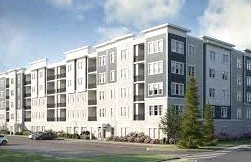
Aries Engineering was retained to support environmental and geotechnical due diligence for a multimillion-dollar residential development in East Providence, Rhode Island. The waterfront property was developed circa 1900 as a steel foundry which operated for nearly 100 years. The property carried significant regulatory complexity due to its industrial history and the presence of multiple Environmental Land Usage Restrictions (ELURs). The client's development vision, two multistory buildings totaling 100 units and 33 townhouse buildings with associated parking and infrastructure, required comprehensive environmental and geotechnical assessments to evaluate potential risks, establish remedial frameworks, and achieve regulatory approval to facilitate redevelopment.
The project presented three (3) regulatory challenges:
Three (3) ELUR-restricted parcels created legal encumbrances that directly affected site usability.
The site's industrial history raised questions about residual contamination in soil and groundwater.
Residential development on a former steel manufacturing facility demanded rigorous environmental assessment and alignment with Rhode Island Department of Management (RIDEM) standards.
Comprehensive Solution
Aries executed a systematic, four-phase investigation designed to reduce uncertainty and establish a clear regulatory pathway.
Phase 1: Regulatory Record Review
Aries conducted a comprehensive review of all prior submissions to RIDEM, including:
• Historical remediation activities and completion status.
• Regulatory correspondence and outstanding compliance requirements.
• ELUR conditions and deed notice obligations.
• Pre-existing Phase I and Phase II Environmental Site Assessment (ESA) findings.
This foundational research established the regulatory baseline and identified data gaps requiring further investigation.
Phase 2: Phase I ESA
Aries conducted an ASTM E1527-21 compliant Phase I ESA to document the site's industrial history, identify recognized environmental conditions (RECs), and define the scope of Phase II work. The investigation included:
• Facility history research (ownership, operational timeline, and process activities).
• Site reconnaissance and visual condition assessment.
• Interviews with property representatives and municipal officials.
• Review of historical aerial imagery and environmental databases.
This assessment confirmed historical steel manufacturing operations and identified potential soil contamination pathways related to industrial waste disposal, metal processing, and petroleum storage.
Phase 3: Phase II Environmental Site Assessment
Based on Phase I findings, Aries designed a targeted Phase II ESA with strategic soil and groundwater sampling to characterize contamination. Sampling locations were selected to assess:
• Historical industrial disposal areas.
• Areas downgradient from former industrial operations.
• Shallow and deep groundwater aquifers.
• Soil conditions beneath proposed building areas.
Laboratory analysis for metals, polycyclic aromatic hydrocarbons (PAHs), and petroleum hydrocarbons provided quantitative contamination data. Results were compared to Rhode Island Remediation Standards (RIRS) to determine whether on-site contamination exceeded residential use thresholds.
Phase 4: Geotechnical Evaluation
Aries performed a geotechnical evaluation to support civil and structural design and construction planning. The geotechnical evaluation included:
• Subsurface borings to characterize soil stratigraphy.
• Bearing capacity and settlement analysis for proposed structures.
• Grading and drainage feasibility.
• Foundation design and ground improvement recommendations.
This work provided the project team site-specific design parameters used in the development of civil and structural design and cost evaluations.
Deliverables
Aries delivered comprehensive technical reports including:
• Regulatory Summary Report: ELUR status, prior remediation activities, and regulatory compliance pathway.
• Phase I ESA Report: Historical analysis and REC identification with prioritized Phase II recommendations.
• Phase II ESA Report: Soil and groundwater laboratory results with RIRS comparison and risk assessment.
• Geotechnical Report: Subsurface conditions, bearing capacity data, and foundation design recommendations.
• Summary Memorandum: Executive-level findings for municipal and RIDEM discussions.
Beneficial Outcome
By delivering transparent, defensible environmental findings, Aries reduced financial risk and positioned the development for municipal approvals and RIDEM sign-off. The redevelopment, which is currently under construction, will provide much needed housing for the greater Providence area, public access to the waterfront, and remediation of a contaminated and underutilized property.
The investigation provided three (3) critical outcomes for project advancement:
Regulatory Clarity: Identification of which ELURs remained enforceable and which could be modified or released, establishing a realistic compliance pathway with RIDEM.
Contamination Assessment: Quantified soil and groundwater conditions, enabling risk-based decision-making on remediation scope and cost.
Constructability Confidence: Geotechnical findings supported feasible foundation design and informed construction sequencing and costs.